SovereignS3nc: The No-Backend Experiment
What if you could build a fully functional social network, a blog, or even a banking app, without ever deploying a backend server? No Node.js API, no Go microservices, no Supabase, and no Firebase. Just a static frontend and a bucket of S3 storage.
That was the goal of SovereignS3nc. I wanted to see how far I could push the concept of a “sovereign network”—where the user truly owns their data, and the application is just a lens through which they view it.
The Vision: Zero Hosted Compute
The core idea is simple: your data lives in an S3 bucket (AWS, OCI, or self-hosted via something like RustFS). When you use an application, you connect it to your storage. You share data by giving other users permission to read specific parts of your bucket, and you follow others by reading from theirs.
Using a single statically hosted frontend, you should be able to:
- Connect to your own data.
- Share with other users.
- Keep everything encrypted and private.
Pushing the Limits
I pushed this idea as far as I could, and while I hit some interesting walls, I also found some elegant ways around them.
What Works Beautifully: Private Stores & E2EE
The private side of things is rock-solid. By using local public keys and E2EE (End-to-End Encryption) via tweetnacl, your data remains secure even if the bucket itself is compromised. Since I don’t allow listing on the S3 bucket, and everything is encrypted with your local key before it even hits the wire, the storage provider is essentially a “dumb” pipe.
The backend storage model I settled on works surprisingly well: SQLite daily files per user. These databases are hashed, encrypted, and synced incrementally. It’s clean, it’s fast, and it blends perfectly with the offline-first architecture.
The Stumbling Block: Shared Resources
The biggest challenge in a serverless, backend-less world is shared state.
In SovereignS3nc, I used a users.json file at a fixed location to handle user discovery. But because multiple users need to write to it (to “register” themselves on the network), it becomes a massive bottleneck. Without a central authority or a backend server to handle user creation and custom access rights, multi-writer shared files are a significant hurdle.
The Demos: Alpha/Beta Ready
I built out a suite of demos that show what’s possible:
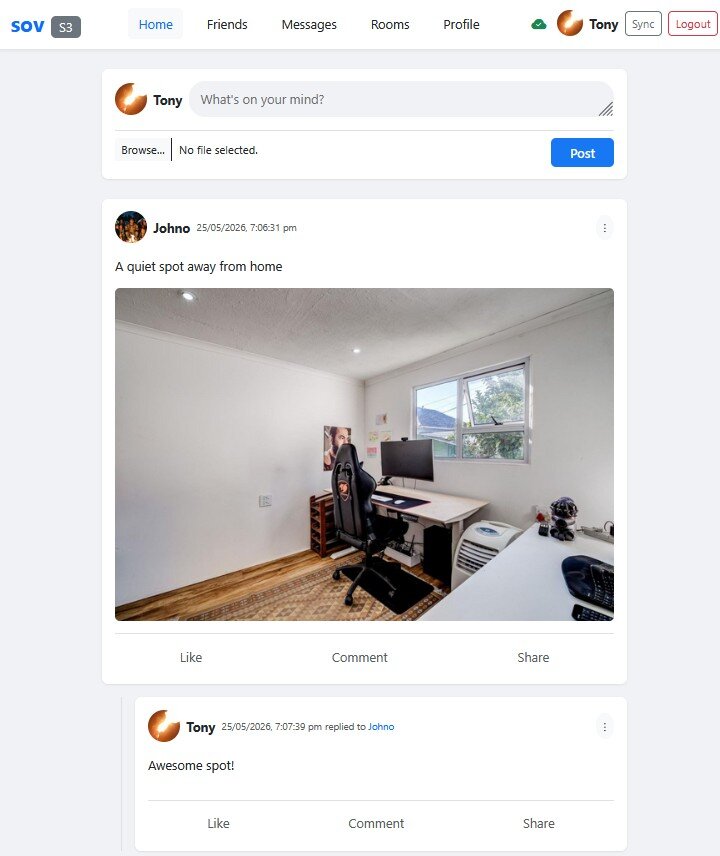
Social Demo
A decentralized social network with messaging and feeds.
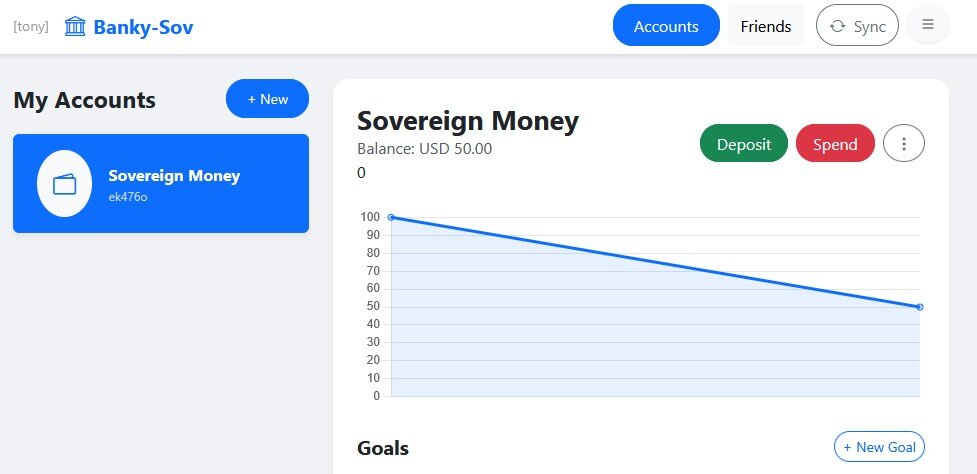
Social Bank (Banky)
A transaction tracker that I actually use for my children’s bank accounts.
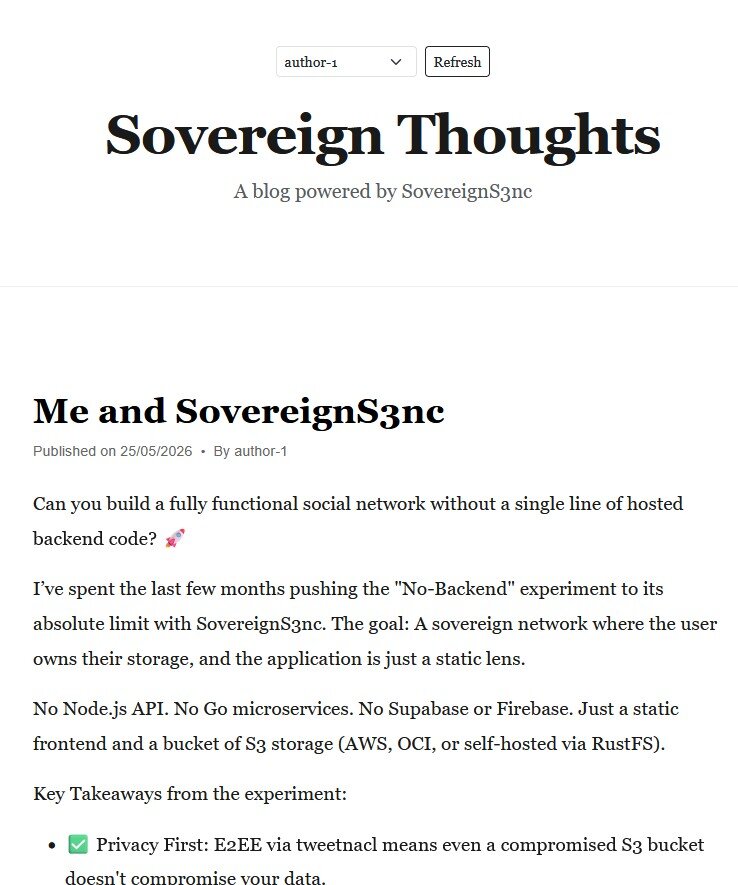
Social Blog
A decentralized blogging platform.
Social Board
A shared message board for distributed teams.
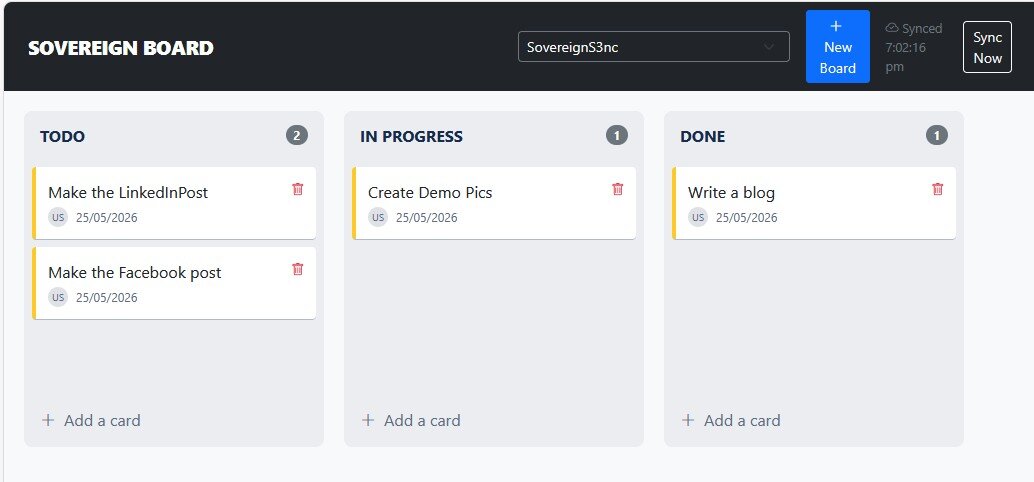
All of these are currently at an Alpha/Beta level and demonstrate that for many use cases, the “no-backend” approach is not just a pipe dream.
Lessons Learned & The Path Forward
In the end, SovereignS3nc is a perfect library for creating flexible, usable stores for personal privately hosted applications. For me, it’s the ideal way to host quick apps that I only access via a VPN.
I believe there’s still a gap in the web standards for a native authentication mechanism that can dynamically build access rights on the server side via S3 APIs. The “real” version of this concept is likely close to something like Supabase. To move SovereignS3nc forwards to something production ready, the next step would be integrating an identity provider and a minimal server to handle user registration and ACLs.
It was a great exercise in taking a concept to its logical extreme. I particularly love the idea of “pop-up” local networks—networks that exist only for a specific event, hosted entirely on the participants’ own S3 buckets.
How do you keep control without a server? How do you handle access control? I have some answers around encryption and security, but definitely still have a few unanswered questions still too.
Check out the SovereignS3nc GitHub page if you want to dive into the code.